Family Album: Gathering Materials
Preserving Memories
Reading time: 5 minutes
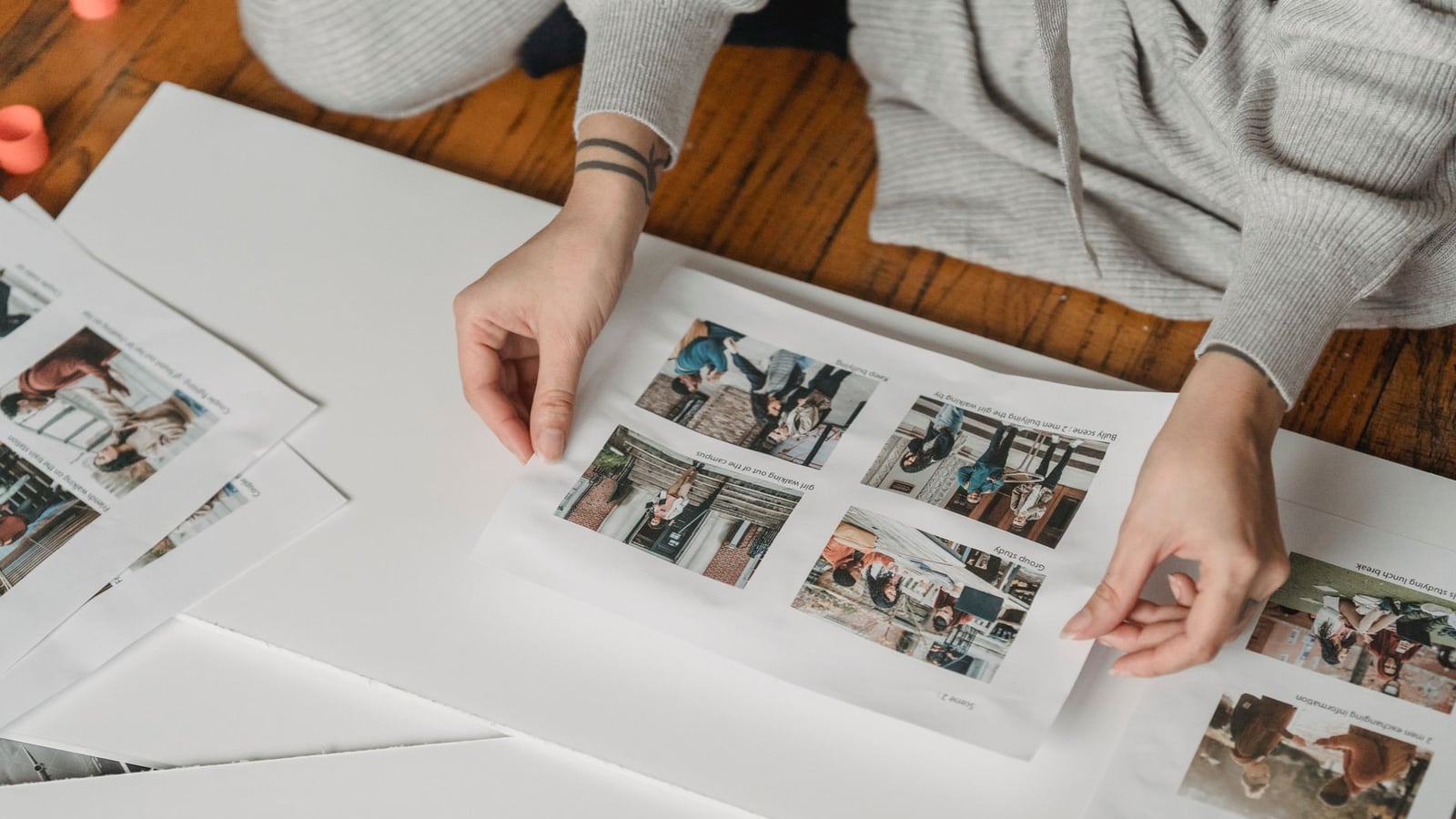
A handmade family album is more than a mere collection of images; it is a tactile archive of your own history. To ensure the binding remains stable and the contents are preserved for decades, the careful selection and preparation of materials are crucial. In this guide, we describe how to systematically assemble your treasures in Linz and the surrounding Upper Austria region.
The Inventory Process
Before we begin the design process, a thorough inventory is necessary. Often, mementos are scattered across different households or stored in old shoeboxes. We recommend gathering all potential contents in one place. This includes not only photographs but also letters, ticket stubs, certificates, or small textile fragments, such as a piece of a christening gown.
Check each object for its condition. Have the photos faded? Are there foxing spots on the paper? While Linz has specialized archives for professional conservation, for private pre-sorting, a clean, dry table and white cotton gloves are sufficient to avoid leaving fingerprints on sensitive surfaces.
Selecting Photographic Content
Not every photo needs to enter the album. The selection of images determines the narrative flow. We advise choosing either a chronological or a thematic structure. Pay close attention to image formats; old analog photos from the mid-20th century often have different proportions than modern digital prints.
If you are printing digital photos, choose acid-free archival paper. Standard photo paper from a local copy shop tends to yellow or stick after a few years. A high-quality print on structured paper also complements the materials used in our handmade notebooks and bespoke albums.
Handling Documents and Ephemera
Letters and handwritten notes add a personal depth to the album. Since different types of paper react differently to moisture and light, you should check if the documents are stable enough for permanent binding. Very thin newspaper paper should be placed in acid-free protective sleeves before being integrated into the album.
In Upper Austria, we often encounter old documents from the industrialization era or local certificates. These historical papers often possess a unique texture, which we can take into account during the binding process to create a harmonious overall appearance.
Textiles and Three-Dimensional Objects
Small fabric remnants, lace, or dried flowers are popular additions. However, caution is required here: organic materials can fade over time or discolor other pages of the album. We recommend either fixing such objects in transparent, archival-grade pockets or placing them so they have no direct contact with other photographs.
For heavier objects, such as old medals or thick coins, we often create special recesses or integrate small envelopes inside the album, ensuring the binding is not stressed by uneven weight distribution.
Collection Checklist
| Material Type | Check / Preparation | Recommendation |
|---|---|---|
| Analog Photos | Label back (pencil only) | Acid-free mounting |
| Digital Prints | Verify paper quality | Use archival paper |
| Letters/Documents | Smooth out creases | Protective sleeves for thin paper |
| Textiles | Check cleanliness and color | Fixation without adhesives |
The Role of Cover Material Selection
The outer shell protects your collection. For a family album, we recommend materials that offer robustness while maintaining a warm, tactile feel. Goat leather is a classic choice for generation albums, as it develops a beautiful patina over time. Linen offers a simple, timeless aesthetic that fits modern family chronicles particularly well.
The choice of color should be guided by the content. An album with many black-and-white photographs looks very cohesive in deep dark blue or classic grey. Those collecting bright, vivid memories can work with natural tones to bring a sense of calm to the overall design.
Preparing for the Workshop
When you hand over your materials to us in Linz, a rough initial sorting helps immensely. Place the contents in the desired order within acid-free envelopes. Make a brief note of any elements that are particularly fragile and where we may need to provide paper reinforcements.
We will discuss in a personal consultation whether a fixed binding or a system with interchangeable pages is preferred. For detailed decision support, read our guide Choosing the Right Binding to align the technical implementation with your specific materials.
Sustainability and Archiving
A family album is an investment in the future. We use exclusively materials that meet modern bookbinding standards. This means no cheap glues that become brittle over the years, and no acidic papers that destroy photographs.
Upon completion, you will receive instructions from us on the optimal storage in your home to minimize light damage and moisture influence. This ensures that the work of our master bookbinders and your precious memories are preserved for decades.
Have you already assembled your materials, or do you need professional advice on selecting the right components for your individual album?
Book a Consultation Appointment